Nonprofit Technology
How to Segment Your Donors to Raise More Money (Without Overcomplicating It)
The short answer: Segment your donors by grouping them into a few meaningful sets, first-time, loyal, monthly, lapsed, major, and event-only, then send each group a message that fits where they are with you. Clean your data first so the groups are accurate, use recency, frequency, and monetary (RFM) to rank who to talk to first, and keep the segments updating themselves so they don't go stale. Five or six groups is plenty to start, and it raises more than sending everyone the same appeal.
Most nonprofits send the same email to everyone on the list. The first-time $25 donor, the board member who gives $10,000, and the person who came to one gala in 2019 and never gave a dime all get the identical year-end appeal. It feels efficient. It quietly costs you money.
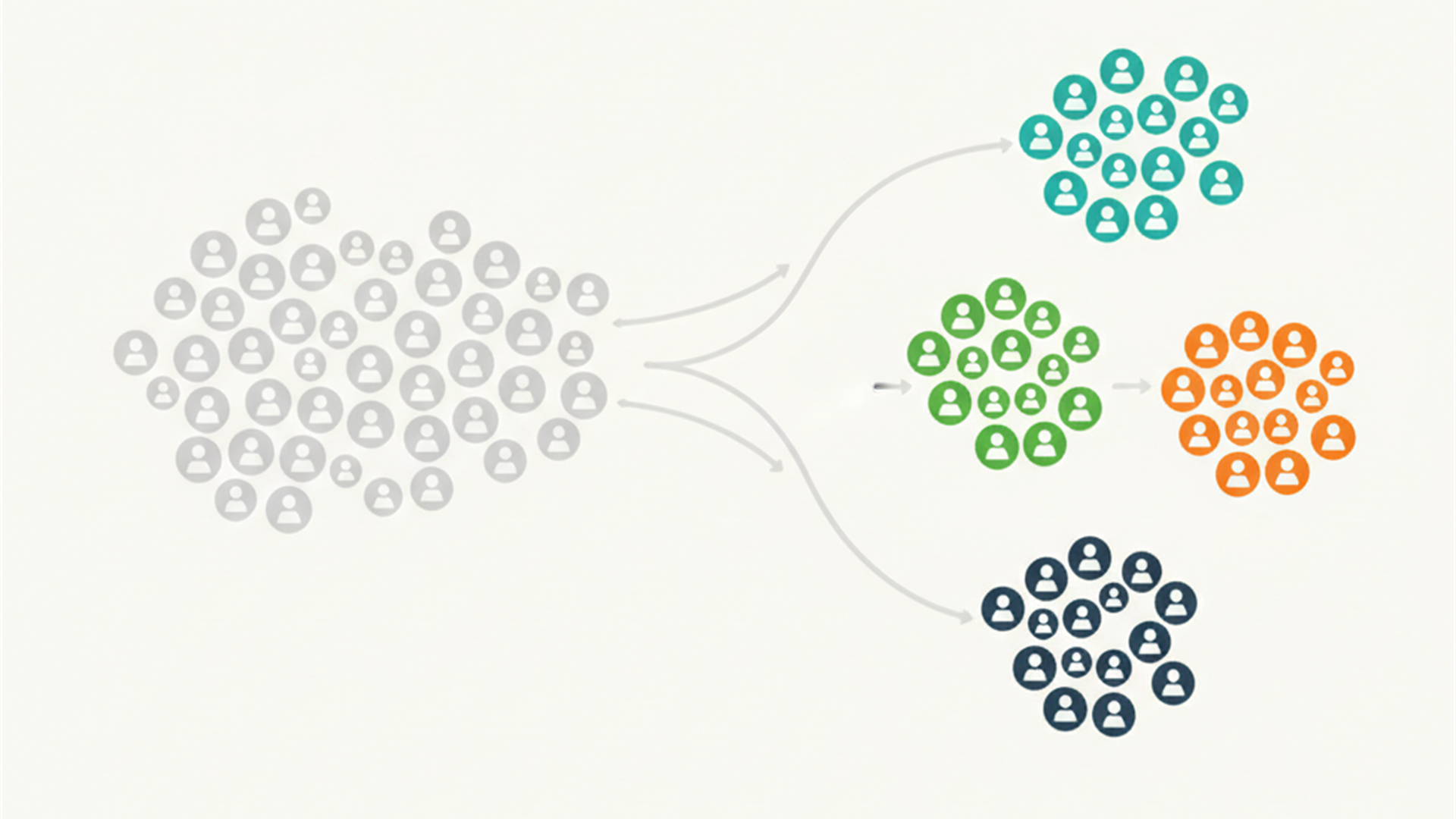
Donor segmentation is the fix, and it's simpler than it sounds. You group your donors by what they have in common, then you talk to each group like you actually know them. The monthly giver hears thank you instead of another ask. The lapsed donor hears we miss you. The major donor gets a real conversation instead of a mass blast. You don't need a data team or a fancy tool. You need clean data and a handful of well-chosen groups. Here's how to build them.
What donor segmentation actually means
Segmentation is grouping the people in your database so you can send the right message to the right person. That's the whole idea. Instead of one list, you have a few meaningful groups: new donors, loyal donors, monthly givers, the folks who drifted away. Each group gets a message that fits where they actually are with you. A donor who gave last week and a donor who gave once three years ago are in very different places, and a smart nonprofit talks to them differently.
You already do a version of this in your head. You wouldn't thank a $10,000 donor with the same form letter you send a first-timer. Segmentation just makes that instinct repeatable, so it happens for every donor and not only the ones you happen to remember.
Why one message for everyone costs you both ways
Treating every donor the same loses money in two directions at once. On one side, you under-ask. Your most committed donors, the ones who would gladly give more or set up a monthly gift, get the same generic appeal as a stranger. You never make the bigger ask because the bigger ask never had its own message. On the other side, you over-ask and annoy. You hit your loyal monthly donors with the same "please give" email three times in December, even though they already give every month, and a few of them get irritated enough to cancel. One message for everyone manages to leave money on the table and burn goodwill in the same send. Segmentation is how you stop doing both.
Clean your data first, or your segments will lie to you
Segments are only as good as the data underneath them. If the same donor sits in your system three times, she might land in "lapsed" on one record while she's an active monthly giver on another. Pull a list off that and you'll thank her, ask her, and apologize to her all in the same week. Before you build a single segment, get your records in order: merge the duplicates, fix the dead contact info, and make sure giving history is attached to the right people. We walked through exactly how to do that in our guide to cleaning up a messy donor database. Do that first. Segmenting on messy data just automates your mistakes.
The handful of segments worth starting with
You don't need forty segments. You need five or six that map to how you actually raise money. Start here:
• First-time donors. People who just made their first gift. This is the most fragile and most important group you have, because most first-time donors never give a second time. They need a great thank-you and a reason to come back.
• Repeat and loyal donors. People who give year after year. They've proven they believe in you. They're your best prospects for an upgrade, a monthly commitment, or a bigger campaign gift.
• Monthly and recurring givers. People on an automatic gift. Treat them like the gold they are. The rule with this group: thank, report, and don't keep asking them to do the thing they're already doing.
• Lapsed donors. People who used to give and went quiet. Warmer than any stranger, because they already gave once. A win-back message built for this group raises more than another cold appeal ever will. We dug into how to bring them back in our piece on donor retention.
• Major and high-capacity donors. Your largest givers, plus the ones who could give big but haven't yet. This group should almost never get a mass email. They get a phone call, a personal note, a real relationship.
• Event and one-time supporters. People who came to a gala or bought an auction item but never gave directly. They showed up once. Your job is to build a bridge from "I went to a fun event" to "I support this mission."
Six groups. That's plenty to start, and it already lets you do far more than a single list ever could.
RFM, in plain English
If you want one simple way to size up a donor, fundraisers have used the same three questions for decades. They go by recency, frequency, and monetary, or RFM, and you don't need software to understand them.
• Recency: When did they last give? Someone who gave last month is far more likely to give again than someone whose last gift was in 2021.
• Frequency: How often do they give? A donor who gives three times a year is more engaged than one who gives once.
• Monetary: How much do they give, not just per gift but across their whole history with you?
Score your donors on those three and your best supporters rise to the top on their own. The donor who gave recently, gives often, and gives generously is the person to call first. The one who gave once, long ago, for a small amount is the one to gently win back or simply keep warm. RFM turns a wall of names into a ranked list of who to talk to and in what order.
How to actually build a segment
The mechanics are less intimidating than the word makes them sound. Four steps:
• Start with the question. Don't build a segment for its own sake. Start with what you want to do: "I want to ask everyone who gave last year but not this year." The question defines the segment.
• Pick the criteria. Translate the question into filters your system understands: last gift date falls in the prior year, total given this year is zero.
• Pull the list and name it well. Save the group with a name your whole team will still understand a year from now. "Lapsed 2024 donors" beats "List 7."
• Make it update itself. The best segments are dynamic. A donor who gives today should drop out of "lapsed" on her own, without anyone re-running anything by hand. If your system can save a live segment that refreshes itself, use it. A frozen list is out of date the day after you build it.
Match the message to the group
Building the segments is half the work. The payoff is what you say to each one.
• First-time donors get a warm, specific thank-you, then a gentle second-gift invitation a few weeks later, not an immediate hard ask.
• Loyal donors get impact and a path to do a little more. Show them what their giving did, then invite them to step up.
• Monthly givers get gratitude and updates, and you suppress them from the general "please give" appeals they don't need.
• Lapsed donors get a we-miss-you with a low-pressure way back in, often a reminder of the specific thing their past gift made possible.
• Major donors get a person, not a campaign. A call, a coffee, a handwritten note.
• Event-only supporters get the story behind the night they attended and an invitation to support the work the rest of the year.
Same organization, same campaign, six different doors in. That's where segmentation pays for itself.
Keep your segments alive
Donors move. A first-timer becomes a repeat donor, a loyal donor lapses, a lapsed donor comes back. If your segments are frozen spreadsheets, they're wrong within weeks and you stop trusting them. Build them to refresh on their own, review the handful you use every quarter, and retire the ones you set up for a one-time campaign and never touched again. A few living segments beat a folder full of stale lists.
Don't over-segment
The opposite mistake is just as real. It's easy to get excited and carve your list into forty micro-groups, like lapsed monthly donors who attended a spring event and opened two emails. Nobody maintains that, and nobody writes forty different messages. Over-segmenting is how good intentions turn into a system too complicated to use, so it quietly gets abandoned. Start with the five or six that matter, get good at speaking to them, and add a new segment only when you have a specific message that needs it.
Why this is so much easier when everything lives in one place
Here's the catch nobody mentions. Good segmentation needs all your donor information together: gifts, events, email activity, volunteer hours, all of it tied to one record per person. When that data is scattered across a separate donation tool, an events platform, an email service, and a spreadsheet, you can't really segment at all. You can't pull "everyone who gave online and came to the gala but isn't a monthly donor" when those three facts live in three systems that don't talk to each other. You end up exporting, matching by hand, and giving up.
When your donations, events, payments, and donor records share one database, a segment like that is a few clicks. That's a big part of what a patchwork of disconnected tools quietly costs you, which we got into in our look at what a patchwork setup really costs your nonprofit. The segmenting isn't the hard part. Having your data in one place is what makes it possible.
Mistakes worth dodging
• Sending one identical appeal to your entire list and calling it efficient.
• Building segments on messy, duplicated data, so the groups are wrong from the start.
• Asking monthly donors to give again as if they aren't already giving every month.
• Blasting your major donors with a mass email instead of a personal touch.
• Freezing your segments so they're out of date within weeks.
• Carving the list into so many micro-groups that nobody can keep up.
The short version, on one page
• Segmentation means grouping donors so each one gets a message that fits.
• One message for everyone under-asks your best donors and over-asks your loyal ones.
• Clean your data first, or your segments will be wrong.
• Start with five or six groups: first-time, loyal, monthly, lapsed, major, and event-only.
• Use recency, frequency, and monetary to rank who to talk to first.
• Build each segment from a real question, name it clearly, and let it update itself.
• Match the message to the group instead of writing one note for all.
• Keep segments living, review them quarterly, and resist the urge to over-segment.
• Keep all your donor data in one place so the segments are even possible.
Segmentation isn't a fundraising trick. It's the difference between shouting at a crowd and talking to people. Get your data clean, build a few groups that match how you actually raise money, and speak to each one like you know them, because you do. You'll ask better, annoy less, and raise more from the donors you already have.
Frequently asked questions
What is donor segmentation?
Donor segmentation is grouping the people in your database so each group gets a message that fits, instead of sending one identical appeal to everyone. Common groups are first-time, loyal, monthly, lapsed, major, and event-only donors.
How do I segment my donors?
Start with a question you want to answer, like everyone who gave last year but not this one. Translate it into filters your system understands (last gift date, total given), save the group with a clear name, and let it update itself so it stays current. Clean your data first so the groups are accurate.
What are the most important donor segments to start with?
For most nonprofits: first-time donors, repeat and loyal donors, monthly and recurring givers, lapsed donors, major and high-capacity donors, and event-only supporters. Five or six groups is enough to start and already lets you do far more than a single list.
What is RFM in fundraising?
RFM stands for recency, frequency, and monetary: when a donor last gave, how often they give, and how much over their whole history with you. Scoring donors on those three surfaces your best supporters and tells you who to call first.
How often should I update my donor segments?
Keep them dynamic so they refresh on their own, and review the handful you use about once a quarter. Frozen lists go out of date within weeks. It helps to keep your data clean so the segments stay accurate.
Does donor segmentation actually raise more money?
Yes. One message for everyone under-asks your most committed donors and over-asks your loyal ones. Matching the message to each group raises more from the supporters you already have, and annoys fewer of them. It pairs closely with donor retention.
Want the full playbook? Our free Nonprofit Operations Guide covers donor data, fundraising, and the day-to-day of running a nonprofit, at no cost and with no sales pitch. And if you'd like to see how your donations, events, and donor records can live in one place so segments like these take a few clicks, we'd be glad to walk you through a quick demo.
Most nonprofits send the same email to everyone on the list. The first-time $25 donor, the board member who gives $10,000, and the person who came to one gala in 2019 and never gave a dime all get the identical year-end appeal. It feels efficient. It quietly costs you money.
Donor segmentation is the fix, and it's simpler than it sounds. You group your donors by what they have in common, then you talk to each group like you actually know them. The monthly giver hears thank you instead of another ask. The lapsed donor hears we miss you. The major donor gets a real conversation instead of a mass blast. You don't need a data team or a fancy tool. You need clean data and a handful of well-chosen groups. Here's how to build them.
What donor segmentation actually means
Segmentation is grouping the people in your database so you can send the right message to the right person. That's the whole idea. Instead of one list, you have a few meaningful groups: new donors, loyal donors, monthly givers, the folks who drifted away. Each group gets a message that fits where they actually are with you. A donor who gave last week and a donor who gave once three years ago are in very different places, and a smart nonprofit talks to them differently.
You already do a version of this in your head. You wouldn't thank a $10,000 donor with the same form letter you send a first-timer. Segmentation just makes that instinct repeatable, so it happens for every donor and not only the ones you happen to remember.
Why one message for everyone costs you both ways
Treating every donor the same loses money in two directions at once. On one side, you under-ask. Your most committed donors, the ones who would gladly give more or set up a monthly gift, get the same generic appeal as a stranger. You never make the bigger ask because the bigger ask never had its own message. On the other side, you over-ask and annoy. You hit your loyal monthly donors with the same "please give" email three times in December, even though they already give every month, and a few of them get irritated enough to cancel. One message for everyone manages to leave money on the table and burn goodwill in the same send. Segmentation is how you stop doing both.
Clean your data first, or your segments will lie to you
Segments are only as good as the data underneath them. If the same donor sits in your system three times, she might land in "lapsed" on one record while she's an active monthly giver on another. Pull a list off that and you'll thank her, ask her, and apologize to her all in the same week. Before you build a single segment, get your records in order: merge the duplicates, fix the dead contact info, and make sure giving history is attached to the right people. We walked through exactly how to do that in our guide to cleaning up a messy donor database. Do that first. Segmenting on messy data just automates your mistakes.
The handful of segments worth starting with
You don't need forty segments. You need five or six that map to how you actually raise money. Start here:
• First-time donors. People who just made their first gift. This is the most fragile and most important group you have, because most first-time donors never give a second time. They need a great thank-you and a reason to come back.
• Repeat and loyal donors. People who give year after year. They've proven they believe in you. They're your best prospects for an upgrade, a monthly commitment, or a bigger campaign gift.
• Monthly and recurring givers. People on an automatic gift. Treat them like the gold they are. The rule with this group: thank, report, and don't keep asking them to do the thing they're already doing.
• Lapsed donors. People who used to give and went quiet. Warmer than any stranger, because they already gave once. A win-back message built for this group raises more than another cold appeal ever will. We dug into how to bring them back in our piece on donor retention.
• Major and high-capacity donors. Your largest givers, plus the ones who could give big but haven't yet. This group should almost never get a mass email. They get a phone call, a personal note, a real relationship.
• Event and one-time supporters. People who came to a gala or bought an auction item but never gave directly. They showed up once. Your job is to build a bridge from "I went to a fun event" to "I support this mission."
Six groups. That's plenty to start, and it already lets you do far more than a single list ever could.
RFM, in plain English
If you want one simple way to size up a donor, fundraisers have used the same three questions for decades. They go by recency, frequency, and monetary, or RFM, and you don't need software to understand them.
• Recency: When did they last give? Someone who gave last month is far more likely to give again than someone whose last gift was in 2021.
• Frequency: How often do they give? A donor who gives three times a year is more engaged than one who gives once.
• Monetary: How much do they give, not just per gift but across their whole history with you?
Score your donors on those three and your best supporters rise to the top on their own. The donor who gave recently, gives often, and gives generously is the person to call first. The one who gave once, long ago, for a small amount is the one to gently win back or simply keep warm. RFM turns a wall of names into a ranked list of who to talk to and in what order.
How to actually build a segment
The mechanics are less intimidating than the word makes them sound. Four steps:
• Start with the question. Don't build a segment for its own sake. Start with what you want to do: "I want to ask everyone who gave last year but not this year." The question defines the segment.
• Pick the criteria. Translate the question into filters your system understands: last gift date falls in the prior year, total given this year is zero.
• Pull the list and name it well. Save the group with a name your whole team will still understand a year from now. "Lapsed 2024 donors" beats "List 7."
• Make it update itself. The best segments are dynamic. A donor who gives today should drop out of "lapsed" on her own, without anyone re-running anything by hand. If your system can save a live segment that refreshes itself, use it. A frozen list is out of date the day after you build it.
Match the message to the group
Building the segments is half the work. The payoff is what you say to each one.
• First-time donors get a warm, specific thank-you, then a gentle second-gift invitation a few weeks later, not an immediate hard ask.
• Loyal donors get impact and a path to do a little more. Show them what their giving did, then invite them to step up.
• Monthly givers get gratitude and updates, and you suppress them from the general "please give" appeals they don't need.
• Lapsed donors get a we-miss-you with a low-pressure way back in, often a reminder of the specific thing their past gift made possible.
• Major donors get a person, not a campaign. A call, a coffee, a handwritten note.
• Event-only supporters get the story behind the night they attended and an invitation to support the work the rest of the year.
Same organization, same campaign, six different doors in. That's where segmentation pays for itself.
Keep your segments alive
Donors move. A first-timer becomes a repeat donor, a loyal donor lapses, a lapsed donor comes back. If your segments are frozen spreadsheets, they're wrong within weeks and you stop trusting them. Build them to refresh on their own, review the handful you use every quarter, and retire the ones you set up for a one-time campaign and never touched again. A few living segments beat a folder full of stale lists.
Don't over-segment
The opposite mistake is just as real. It's easy to get excited and carve your list into forty micro-groups, like lapsed monthly donors who attended a spring event and opened two emails. Nobody maintains that, and nobody writes forty different messages. Over-segmenting is how good intentions turn into a system too complicated to use, so it quietly gets abandoned. Start with the five or six that matter, get good at speaking to them, and add a new segment only when you have a specific message that needs it.
Why this is so much easier when everything lives in one place
Here's the catch nobody mentions. Good segmentation needs all your donor information together: gifts, events, email activity, volunteer hours, all of it tied to one record per person. When that data is scattered across a separate donation tool, an events platform, an email service, and a spreadsheet, you can't really segment at all. You can't pull "everyone who gave online and came to the gala but isn't a monthly donor" when those three facts live in three systems that don't talk to each other. You end up exporting, matching by hand, and giving up.
When your donations, events, payments, and donor records share one database, a segment like that is a few clicks. That's a big part of what a patchwork of disconnected tools quietly costs you, which we got into in our look at what a patchwork setup really costs your nonprofit. The segmenting isn't the hard part. Having your data in one place is what makes it possible.
Mistakes worth dodging
• Sending one identical appeal to your entire list and calling it efficient.
• Building segments on messy, duplicated data, so the groups are wrong from the start.
• Asking monthly donors to give again as if they aren't already giving every month.
• Blasting your major donors with a mass email instead of a personal touch.
• Freezing your segments so they're out of date within weeks.
• Carving the list into so many micro-groups that nobody can keep up.
The short version, on one page
• Segmentation means grouping donors so each one gets a message that fits.
• One message for everyone under-asks your best donors and over-asks your loyal ones.
• Clean your data first, or your segments will be wrong.
• Start with five or six groups: first-time, loyal, monthly, lapsed, major, and event-only.
• Use recency, frequency, and monetary to rank who to talk to first.
• Build each segment from a real question, name it clearly, and let it update itself.
• Match the message to the group instead of writing one note for all.
• Keep segments living, review them quarterly, and resist the urge to over-segment.
• Keep all your donor data in one place so the segments are even possible.
Segmentation isn't a fundraising trick. It's the difference between shouting at a crowd and talking to people. Get your data clean, build a few groups that match how you actually raise money, and speak to each one like you know them, because you do. You'll ask better, annoy less, and raise more from the donors you already have.
Frequently asked questions
What is donor segmentation?
Donor segmentation is grouping the people in your database so each group gets a message that fits, instead of sending one identical appeal to everyone. Common groups are first-time, loyal, monthly, lapsed, major, and event-only donors.
How do I segment my donors?
Start with a question you want to answer, like everyone who gave last year but not this one. Translate it into filters your system understands (last gift date, total given), save the group with a clear name, and let it update itself so it stays current. Clean your data first so the groups are accurate.
What are the most important donor segments to start with?
For most nonprofits: first-time donors, repeat and loyal donors, monthly and recurring givers, lapsed donors, major and high-capacity donors, and event-only supporters. Five or six groups is enough to start and already lets you do far more than a single list.
What is RFM in fundraising?
RFM stands for recency, frequency, and monetary: when a donor last gave, how often they give, and how much over their whole history with you. Scoring donors on those three surfaces your best supporters and tells you who to call first.
How often should I update my donor segments?
Keep them dynamic so they refresh on their own, and review the handful you use about once a quarter. Frozen lists go out of date within weeks. It helps to keep your data clean so the segments stay accurate.
Does donor segmentation actually raise more money?
Yes. One message for everyone under-asks your most committed donors and over-asks your loyal ones. Matching the message to each group raises more from the supporters you already have, and annoys fewer of them. It pairs closely with donor retention.
Want the full playbook? Our free Nonprofit Operations Guide covers donor data, fundraising, and the day-to-day of running a nonprofit, at no cost and with no sales pitch. And if you'd like to see how your donations, events, and donor records can live in one place so segments like these take a few clicks, we'd be glad to walk you through a quick demo.